Trang chủ » Nighttime Stabilization Appliance: Purpose and Instructions for Using
Nighttime Stabilization Appliance: Purpose and Instructions for Using
Research has shown that the average daily tooth contact time for chewing is approximately 30 minutes. However, non-functional tooth contact – such as clenching during the day and especially during sleep – can last up to 2 hours. Even more concerning is that the biting force during sleep can be 5 to 10 times stronger than that of normal chewing.
This highlights a paradox: we tend to use our teeth more for unconscious and non-functional activities than for their intended purpose. In today’s world, with smartphones and instant gratification dominating our habits, mental stress and psychological fragmentation have become common – making bruxism (teeth grinding) increasingly widespread in the population.
The consequences of unconscious night-time tooth contact can be severe:
Cracked or fractured teeth
Cervical and occlusal tooth wear
Tooth sensitivity
Tooth loss
Facial muscle pain, especially migraines and ear-related symptoms
Temporomandibular joint (TMJ) degeneration
Therefore, especially in full-mouth rehabilitation cases, a dentist’s role goes beyond treatment – it includes identifying the underlying causes of dental deterioration and providing long-term prevention strategies.
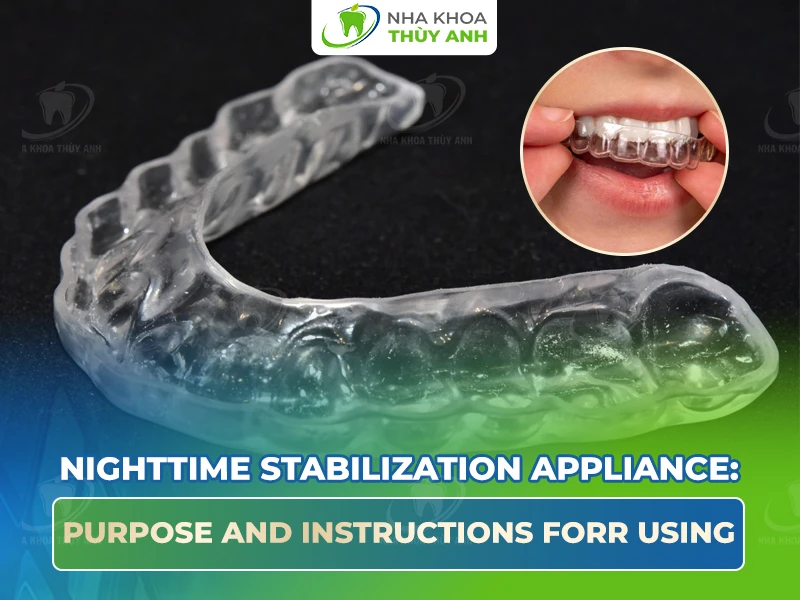
The nighttime stabilization appliance is a protective device designed to support restful sleep, allowing facial muscles to relax. Patients often wake up feeling refreshed, with clearer airways, less tension, and maximum protection for both restorations and natural teeth.
Your teeth should only be used for functional purposes and when it comes to parafunctional activities like clenching, let the night guard take the hit for you.
Still unsure?
You might be thinking: “I don’t have sleep issues.” “Wearing something in my mouth feels uncomfortable.” “I don’t grind my teeth.”
The truth is: we all grind or clench at some point. If you saw some of our patients who used to suffer from constant headaches, jaw fatigue, popping noises when opening/closing their mouths, or limited jaw movement – and how they’ve recovered – you’d understand the life-changing effects of wearing a night guard.
There’s nothing complicated about it: Simply put it in before bed, and the next morning, you’ll feel a lighter head, a clearer mind, relaxed muscles, and best of all, your teeth will be protected for life.
Remember: the force during sleep bruxism is up to 5 times stronger, and the duration of clenching can be 5 times longer than that of functional chewing. This is no small matter.
How to Use the Night Guard?
Before Wearing the Guard
Brush and floss to clean your teeth thoroughly. Any food residue can cause odor in the guard.
Rinse the guard with clean water before placing it in your mouth.
While Wearing the Guard
Wear it right before going to sleep.
Do not eat or drink while wearing it.
If you feel pain, pressure, or discomfort, return to your dentist for adjustment.
Do not attempt to adjust or trim the guard by yourself.
How to Clean and Store the Guard
In the morning, rinse the guard with clean water after removing it.
Use a soft toothbrush and mild soap (not abrasive toothpaste) to clean the guard.
Avoid hot water, as it may deform the material.
Let it air-dry naturally, then store it in a ventilated case.
Keep it away from heat sources (stoves, direct sunlight).
Keep out of reach of pets – dogs love chewing on night guards, and they’re easily lost!
A Gift to Your Health
We believe that teeth don’t crack, wear down, or fall out by accident. The night guard is the final line of defense that protects your restorations and helps maintain the health of your teeth, muscles, and jaw joints.
Did you know? The lower jaw is the only movable bone in your head. Its movement affects your cervical spine alignment and the entire musculoskeletal system of the head and neck.
Thuy Anh Dental Clinic
Partner Locations Hanoi
No. 181 Yen Lang Street – Dong Da District – Hanoi
No. 10 Dich Vong Hau Street – Cau Giay District – Hanoi

 Về nha khoa Thùy Anh
 Niềng răng mắc cài