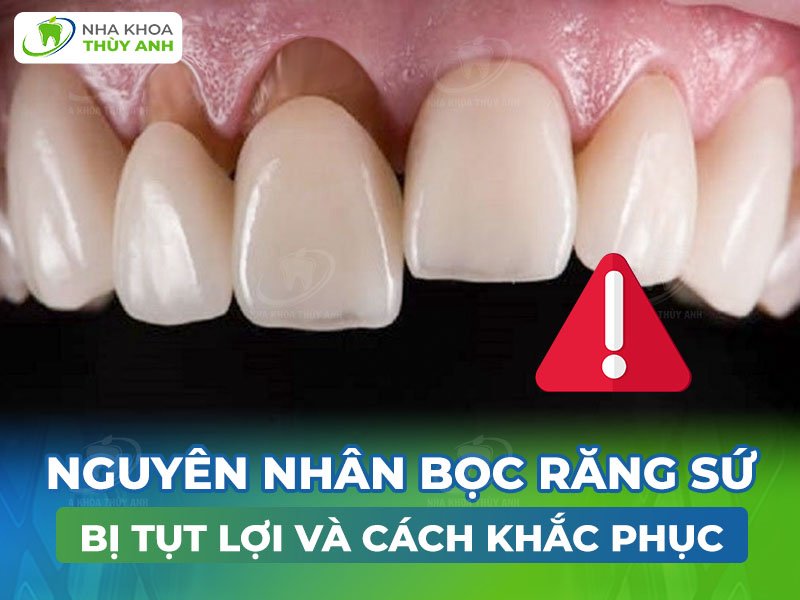
What Is Gingival Recession? How To Treat It Effectively? Thuy Anh Dental

Gingival recession is a common periodontal condition that affects a significant portion of the population and is frequently identified during routine dental check-ups. When it occurs, patients often experience problems such as food impaction, tooth sensitivity particularly to hot or cold stimuli, concerns about potential tooth loss, and self-consciousness when speaking or smiling. Recession involving the front teeth is especially distressing due to its aesthetic implications. In this article, nhakhoathuyanh.com offers a comprehensive overview of gingival recession and the most up-to-date treatment options available. Let’s explore!  

What is gingival recession?

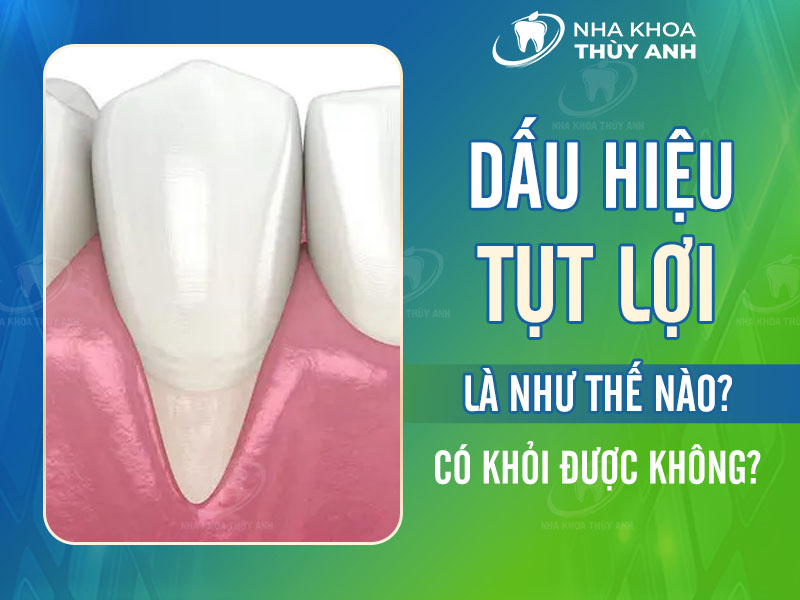
According to the American Academy of Periodontology,a healthy tooth crown is typically protected by a hard enamel layer that meets the root surface at a point called the cemento-enamel junction (CEJ). Gingival recession refers to the apical displacement of the gum margin, exposing the root surface beyond this natural junction.

Normal profit reference image

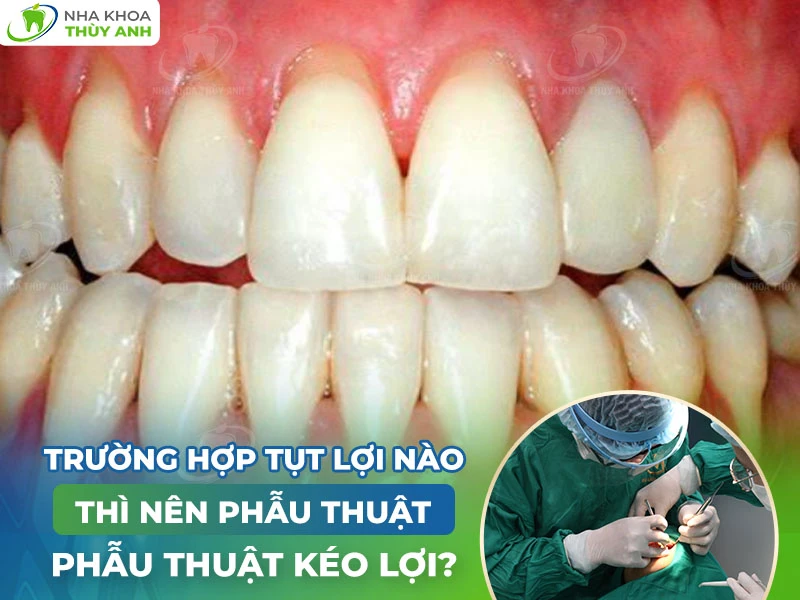
Gingival recession refers to the exposure of the tooth root in the oral cavity. Since the root surface lacks a protective enamel layer, it is highly sensitive and prone to discomfort, especially to temperature changes or brushing. The root structure is also relatively soft, making it more susceptible to abrasion from toothbrush bristles. This is why gingival recession is often accompanied by cervical tooth wear. 

Conversely, when the gingival margin extends too far coronally, it may cover more of the tooth than appropriate, resulting in a short clinical crown. In such cases, a crown lengthening procedure may be required to restore aesthetic balance. While excessive gingival coverage usually does not interfere with function, it can significantly affect smile aesthetics. This condition is commonly referred to as a "gummy smile" due to the appearance of short crowns. 

Gingival recession is considered a periodontal condition, and its treatment typically involves three phases: Addressing the underlying causes, re-evaluation, and surgical or restorative intervention.

In case of gingival recession affecting a canine tooth, the yellow line indicates the cemento-enamel junction (CEJ). The exposed root surface appears darker compared to the enamel-covered crown above. The severity of recession is measured by the distance from the CEJ to the gingival margin is 2 mm. 

Gingival recession doesn’t always begin or progress with noticeable pain, which is why many people tend to overlook it. Once gum tissue has receded, it does not grow back on its own, that’s why, if you notice signs such as exposed tooth roots or teeth that appear longer than usual, it’s important to schedule a dental visit as soon as possible. Regular dental check-ups also play a crucial role in spotting gum recession early when treatment is simpler, more effective, and less invasive. Without timely treatment, gum recession can gradually worsen, leading to bone loss, periodontal disease, and ultimately, an increased risk of tooth loss.

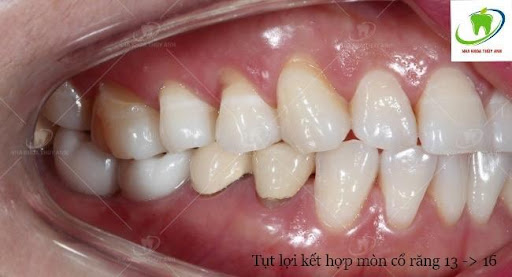
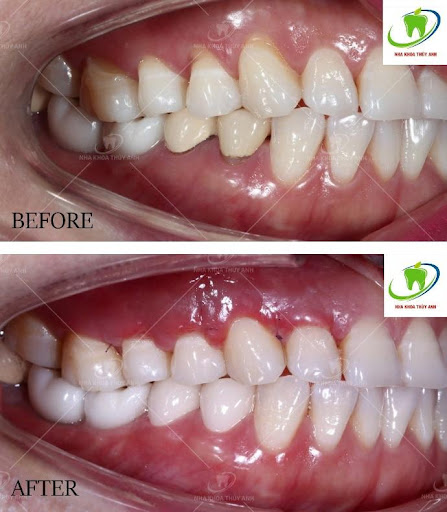
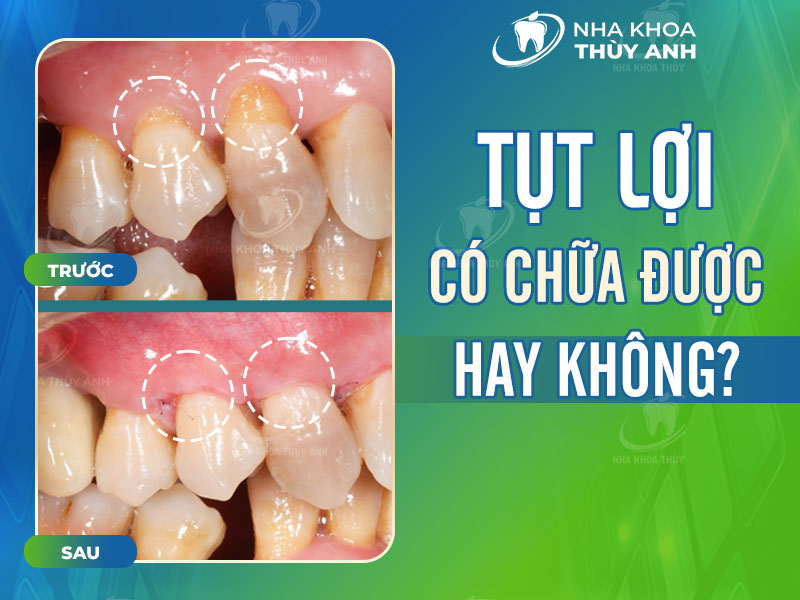
The patient visited Thuy Anh Dental Clinic with a primary concern of tooth sensitivity when consuming hot and cold foods. She also reported noticing that her tooth roots appeared longer, which caused her considerable anxiety. Clinical examination revealed gingival recession affecting four upper teeth, from the canine to the first molar. The exposed root surfaces had been subjected to prolonged chewing forces and aggressive brushing, resulting in cervical wear and the development of deep, wedge-shaped lesions. In the lower arch, the patient had two porcelain crowns that had been placed several years prior. However, gum recession had since occurred around these crowns, exposing the root surfaces and revealing a dark margin that negatively impacted the overall esthetics of her smile.

The treatment approach depends on the specific site of gingival recession. For the upper arch, the treatment plan begins with restoring the cervical defects of the affected teeth using composite resin fillings. This is followed by a root coverage procedure employing a surgical flap technique. The dentist will carefully design incision lines along the remaining gingival tissue and perform a tension-relieving technique to advance the flap toward the crown of the tooth. The flap is then secured in place by suturing it to the adjacent papillae using resorbable sutures. Below are the results immediately after surgery and one week post-operation. As you can see, the previously receded gum line has been repositioned, fully covering the exposed root surfaces and the patient also reported complete relief from tooth sensitivity.

In the lower arch, gingival recession was observed around several porcelain-fused-to-metal (PFM) crowns. Because the recession located in areas with limited aesthetic impact, surgical intervention as previously performed in the upper arch was deemed unnecessary. Instead, the dentist opted to remove the old PFM crowns and replace them with new all-ceramic crowns that adapt precisely to the current gum contour.The cost of replacing each crown starts at 3 million VND per tooth. The final result is a significantly more balanced and aesthetically pleasing smile.

What causes gingival recession?

Gingival recession typically occurs due to the presence of unfavorable anatomical conditions, combined with one or more contributing risk factors. 

Unfavorable anatomical conditions may include: Thin or dehiscent alveolar bone; Lack of sufficient attached or keratinized gingiva ; Severe dental crowding or tooth malposition 

Risk factors can be divided into two main categories:

– Inflammatory factors: These include plaque accumulation and other contributing elements that exacerbate inflammation, such as ill-fitting dental restorations or biological width invasion caused by over-contoured crowns or overly deep tooth preparation. 

– Traumatic factors: These include the use of a hard-bristled toothbrush or applying excessive brushing force to the teeth and gums.

A common cause of gum recession is improper brushing technique, especially horizontal scrubbing with excessive force. This habit can cause trauma to the gums and contribute to recession over time. It is relatively easy to detect during patient interviews about oral hygiene practices and is often associated with visible cervical abrasions on the affected teeth.

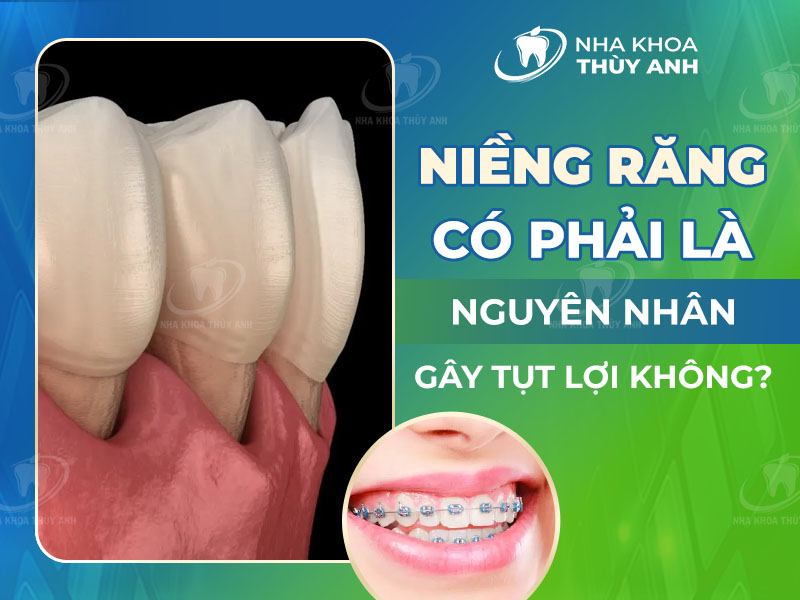
When the dental arch is misaligned, chewing forces are distributed unevenly across the teeth. Over time, this imbalance can result in alveolar bone loss and gum recession, particularly in areas exposed to excessive occlusal pressure. Orthodontic treatment provides a comprehensive solution to this problem. Not only does it improve the alignment and aesthetic appearance of your smile, but it also helps restore functional balance in your bite, ultimately reducing the risk of gum recession.

Orthodontic treatment successfully resolved gum recession in the three front teeth, which was originally caused by dental crowding and misalignment.
Early Orthodontic Intervention to Correct Gum Recession and Papilla Loss in Lower Front Teeth

Inflammatory factors such as tartar, dental plaque, or flaws in existing restorations must be carefully identified and removed during the treatment phase targeting the underlying condition.

How to Treat Gingival Recession at Thuy Anh Dental

During the course of treatment, dentist will perform a re-evaluation several weeks after the initial removal of etiological factors. This step is crucial and must not be overlooked, as it helps determine whether surgical intervention is required. 

In most cases, once all contributing factors are addressed, the progression of gum recession will stop. Some patients even experience gradual improvement after adopting proper brushing techniques, undergoing professional scaling, and resolving inflammation. In these cases, the exposed root surface may be fully covered again over time without the need for surgery. This natural healing process can occur over several years, provided the patient strictly follows the recommended maintenance and care protocols. Such an outcome is generally acceptable in posterior regions, where the primary role of teeth is chewing function rather than aesthetics. 

However, in the anterior region, including the front teeth, canines, and premolars - aesthetics play an equally important role alongside function. When gum recession occurs in these areas, it can expose unsightly black triangles between the teeth, significantly impacting a patient’s confidence when speaking or smiling. In such cases, surgical intervention is chosen not only to halt further gum recession but also to restore the aesthetic harmony of the smile.

– Flap Advancement Technique: Indicated for mild cases of gingival recession, this technique involves repositioning a flap of gum tissue toward the crown of the tooth. When the recession is localized to one or a few teeth and adequate gingival thickness is present in the adjacent area, a laterally positioned flap may be used to effectively cover the exposed root surface.

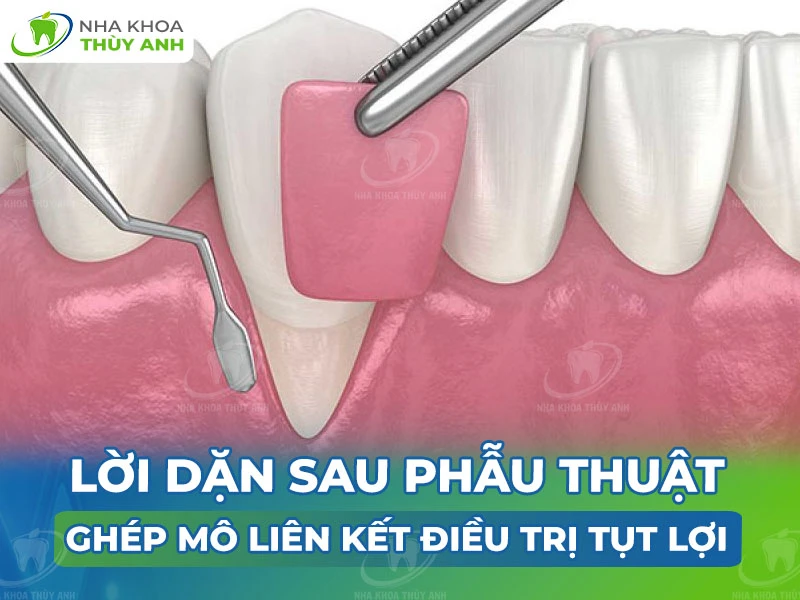
– Connective Tissue and Free Gingival Grafts: For more advanced cases involving significant soft tissue loss and inadequate gingival coverage, a connective tissue graft is typically recommended. Graft material is usually harvested from the patient’s palate and transplanted to the recession site to restore tissue volume and improve root coverage. This technique is one of the most commonly used methods in clinical practice for managing severe gingival recession.

– Esthetic Porcelain Restorations: As an alternative solution for restoring esthetics and minimizing root sensitivity, porcelain crowns or veneers can be placed over the exposed root surfaces. This option is particularly suitable when gingival recession is accompanied by tooth discoloration or other cosmetic concerns.

>>> Learn more: https://nhakhoathuyanh.com/lam-rang-su-o-dau-dep-dam-bao-uy-tin-va-chat-luong/

Is Gum Repositioning Possible in Every Case?  

According to Professor Zucchelli, a world-renowned expert in gingival recession treatment, the maximum root coverage (MRC) achievable through flap advancement surgery largely depends on the level of recession at the tips of the interdental papillae, meaning the gum tissue between the affected tooth and its adjacent teeth.

How much does Gingival Recession Treatment cost?

At Thuy Anh Dental, the current promotional price for simple flap surgery to cover exposed tooth roots is 1 VND per tooth, for cases that require connective tissue grafting the fee is 2 VND per tooth.If the gum recession is minor and can be managed with a direct composite restoration, the cost is 500 VND per tooth. For more comprehensive coverage using porcelain crowns, prices start from 3 VND per tooth. You can refer to the detailed pricing for gum recession treatments below:

   Service TypeListed price Unit
Gingival recession treatment2.000.000 VNĐ ~ XNUMX USD1 tooth 
Gingival recession treatment with connective tissue graft3.000.000 VNĐ ~ XNUMX USD1 tooth
Case of Gum Recession and Aesthetic Tooth Correction with Porcelain Crowns at Thuy Anh Dental Clinic

This article was contributed by Dr. Hoang Minh Huy – a specialist in periodontal surgery and the management of soft tissue defects in the oral cavity. Dr. Minh Huy has delivered presentations on gum recession treatment at advanced conferences for periodontists and oral surgeons.

We hope this article has provided you with a clearer understanding of gum recession and an overview of the current treatment options available.Thank you for following our educational series, for further information or to schedule a personalized consultation, please feel free to contact our expert team at Thuy Anh Dental Clinic using the information below.

Answer

Your email will not be displayed publicly. Required fields are marked *

Posts same category
We are here
phone
phone no background