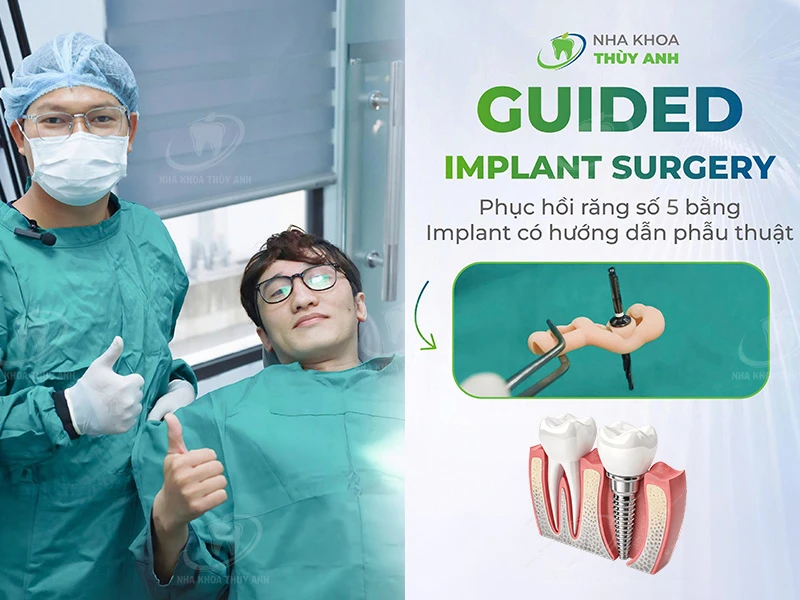
Losing a tooth might not change your life drastically right away. But for Mr. Tu, the gradual loss of his fifth tooth made eating more difficult. Instead of waiting until other problems started to arise, he decided to address the issue early to restore the missing tooth.
That's also why he chose to get dental implants at Thuy Anh Dental Clinic. For him, restoring a tooth isn't simply about filling a gap, but also about maintaining stable chewing function and minimizing the potential problems that can arise from prolonged tooth loss.
When small gaps begin to affect chewing.
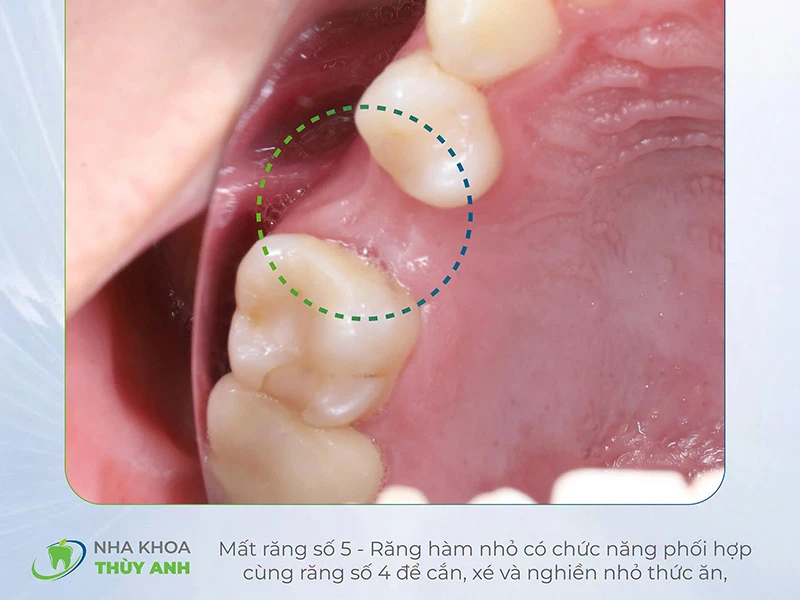
Tooth number 5 belongs to the group of premolars, participating in the process of biting, tearing, and grinding food before it is passed on to the molars. Therefore, even though he only lost one tooth, Anh Tú gradually felt the inconvenience in his daily eating.
Initially, the gap might not have significantly altered his daily life. But as chewing became more difficult in the area where the tooth was missing, Anh Tú realized it was no longer a problem to be ignored. Instead of letting himself get used to the absence of a tooth, he began to consider restoring the missing tooth.
What Anh Tú is concerned about is not just having a tooth back for easier chewing. Prolonged tooth loss can be accompanied by bone loss in the area of the missing tooth, changes in soft tissue, and effects on adjacent teeth. As these changes progress, subsequent restoration can also become more complicated.
Anh Tú shared: "The longer you wait after losing a tooth, the more the jawbone resorbs, the weaker the surrounding teeth become, and the more difficult it will be to restore it."
Therefore, when the loss of tooth number 5 began to significantly affect his chewing, Anh Tú chose to get an implant instead of waiting any longer. For Anh Tú, addressing the problem as soon as he felt the discomfort was better than letting the gap remain and waiting for other complications to arise.
For a tooth to be put back into its correct position, everything has to be planned in advance.
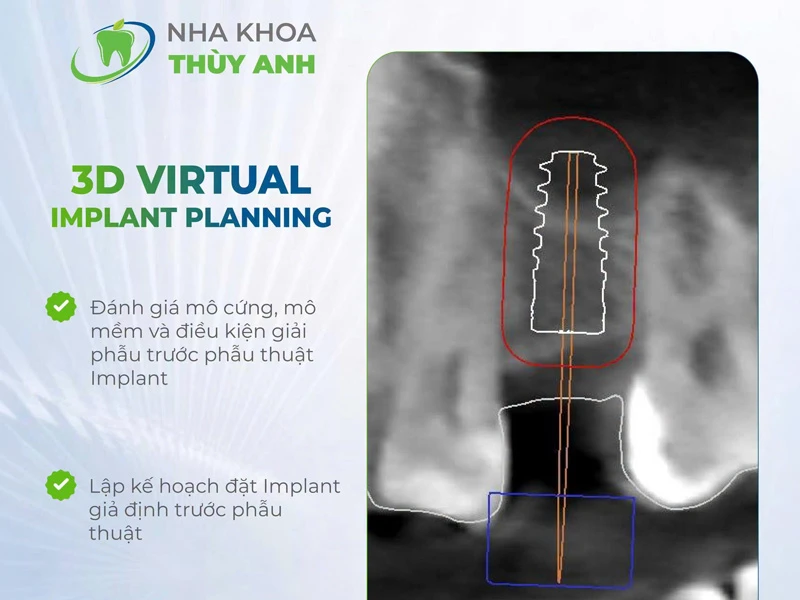
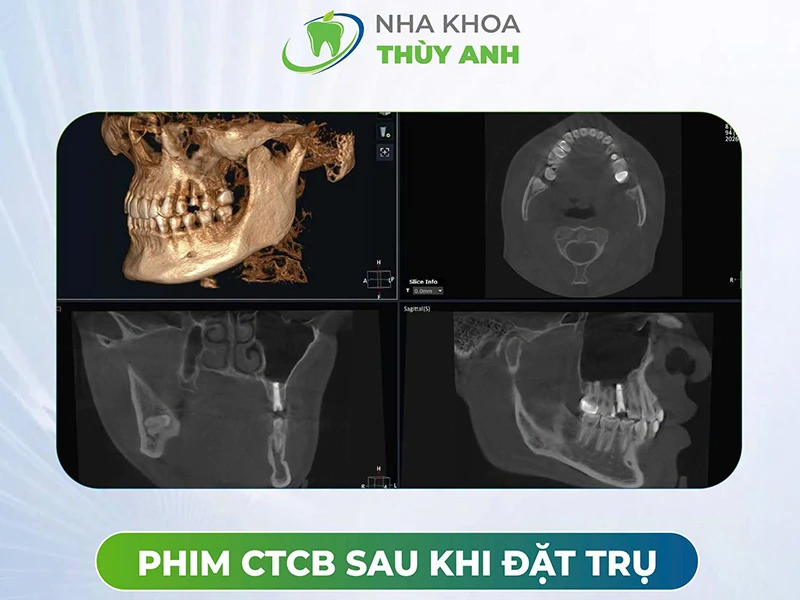
After deciding to restore tooth number 5 with an implant, Anh Tú underwent an examination and treatment plan developed using Guided Implant Surgery – implant surgery using a guide. Instead of simply determining the implant placement during surgery, the plan was prepared in advance based on 3D imaging data and digital simulations.
In Anh Tú's case, the missing tooth area was assessed using 3D imaging along with related anatomical structures. From this data, the doctor determined the appropriate implant placement location and orientation, and calculated the restoration plan accordingly.
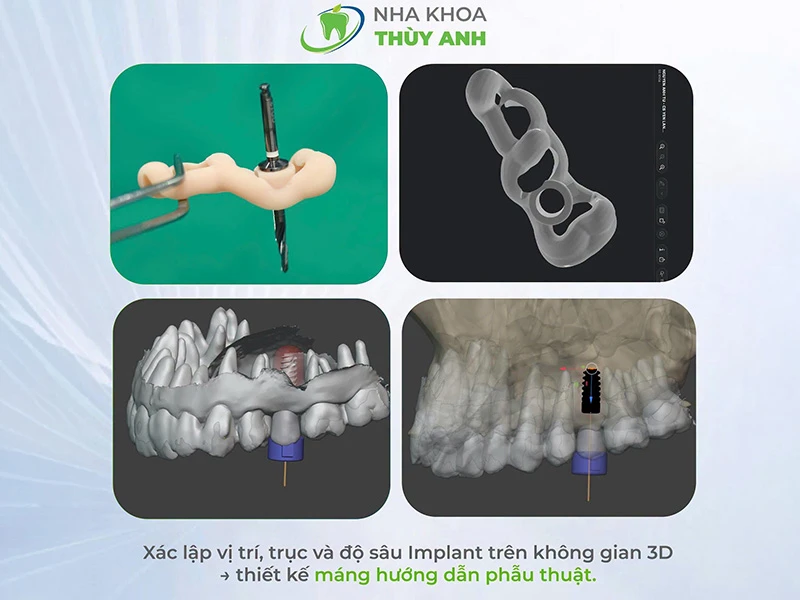
The implant placement was then simulated using software. The axis and position of the implant were established beforehand, and then a guide was custom-designed for Anh Tú based on the 3D plan.
The key to this method lies in the fact that the implant placement plan is not only visualized in software but is also translated into specific guidance during the surgery. The guide helps the surgeon control the position and axis of the implant according to the prepared plan, in line with the restoration orientation.
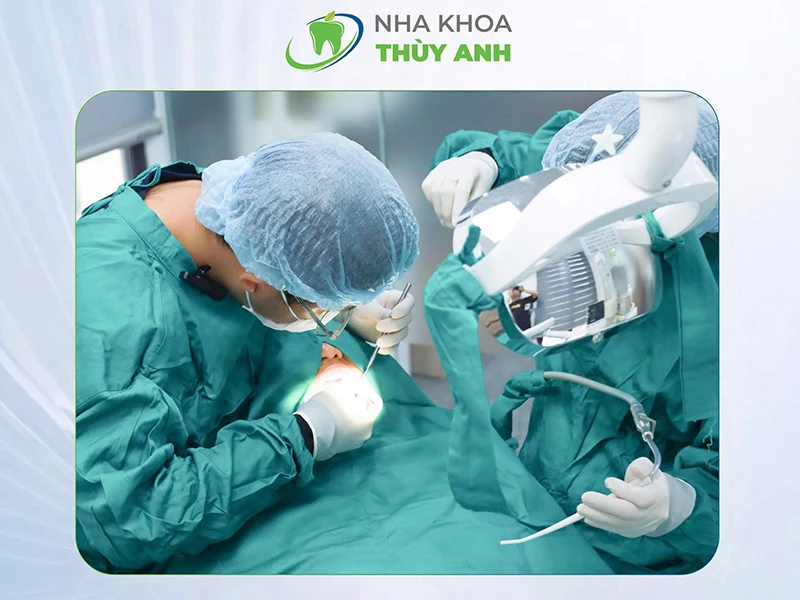
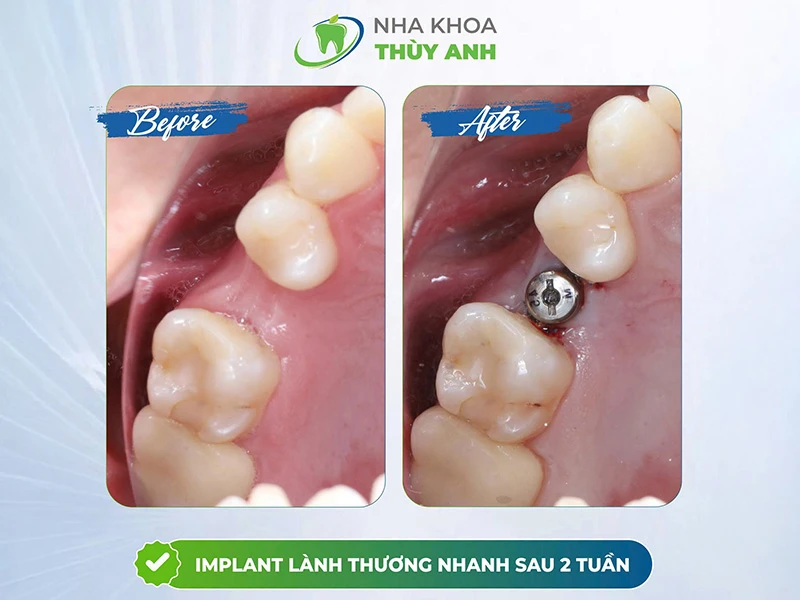
Once the plan was finalized, Anh Tú underwent the implant surgery with a guide. The surgery went smoothly, and the treated area healed well afterward. He continued to monitor his progress and waited for the implant to integrate with the bone before moving on to the prosthetic restoration.
It is expected that after about 3 months, the team will take impressions to create the implant-supported restoration, completing the process of restoring the missing tooth number 5.
Anh Tú chose to address that gap before it became a bigger problem.
For Anh Tú, the decision to get dental implants stemmed from a very practical reason: his fifth tooth was missing, and the gap was starting to affect his chewing. But the more he researched, the more he realized that the important thing was not just the current inconveniences, but also the changes that could occur if the tooth loss continued.
Therefore, he didn't wait until the gap became more difficult to treat before starting. Restoration was carried out when the edentulous area was still in a suitable condition for implant planning, allowing the dentist to proactively prepare the implant placement site and guide the restoration from the outset.
The surgery is complete, but Anh Tú's treatment still has one crucial step ahead. The implant needs time to integrate before the restoration can be performed. This waiting period is also a necessary part of ensuring the recovery process proceeds as planned.
Ultimately, Anh Tú's goal remains simple: to have the missing tooth back so that chewing becomes easier. The value of a tooth doesn't lie in whether others notice the change, but in the very ordinary things of everyday life—a meal, chewing food, or the feeling of no longer having to pay attention to the gap that once existed in the dental arch.
Anh Tú's story began with the loss of a fifth tooth, but his choice was geared towards something more long-term: proactively restoring the tooth while it was still possible, rather than waiting until the tooth loss led to many other changes. A gap may start out small, but how we choose to address it early can make a difference in the recovery process later on.
THUY ANH DENTAL CLINIC – A REPUTABLE DENTAL CLINIC IN VIETNAM IN-DEPTH ABOUT

 About Thuy Anh Dental
 Braces